
Halifax County Property Tax Records Separate Assessment and Billing
Halifax County property tax records tie a value in the land book to a bill the Treasurer collects. The duties sit close together. But they are not one transaction. The Commissioner of the Revenue administers tax relief and land-use programs, while the assessment office handles real-estate valuation. That matters for routing questions. An assessment dispute belongs with the assessment office. A bill or payment problem belongs with the Treasurer, and an eligibility question belongs with whoever runs the program.
| Record or function | Office | What to verify |
|---|---|---|
| Real-estate land book | Real Estate Assessment Office | Parcel, owner of record, assessment year and value |
| Real-estate bill | Treasurer | Account type, installment and amount due |
| Tax relief application | Commissioner of the Revenue | Program rules, household facts and documents |
| Assessment appeal | Assessment office / Board of Equalization route | Parcel, grounds and current submission instructions |
| Town levy question | Town and Halifax County offices as applicable | Whether the parcel lies inside town limits |
A paid bill is a handy account record. Payment alone is not proof of title. Match every figure to the right parcel and tax year before you set it beside a deed or a plat map.
Looking Up a Halifax County Property Tax Bill
The Treasurer's page links an online payment service, so start there and follow the instructions in the live gateway. The Treasurer collects more than real estate. Personal property, machinery and tools, permit fees, licenses, E-911 charges, and utility taxes all flow through the same office. That is why the default account type matters. Never assume the first result is the land bill. Halifax County's Treasurer page lists tax rates, due dates, and payment directions. Pick the real-estate account before you enter anything.
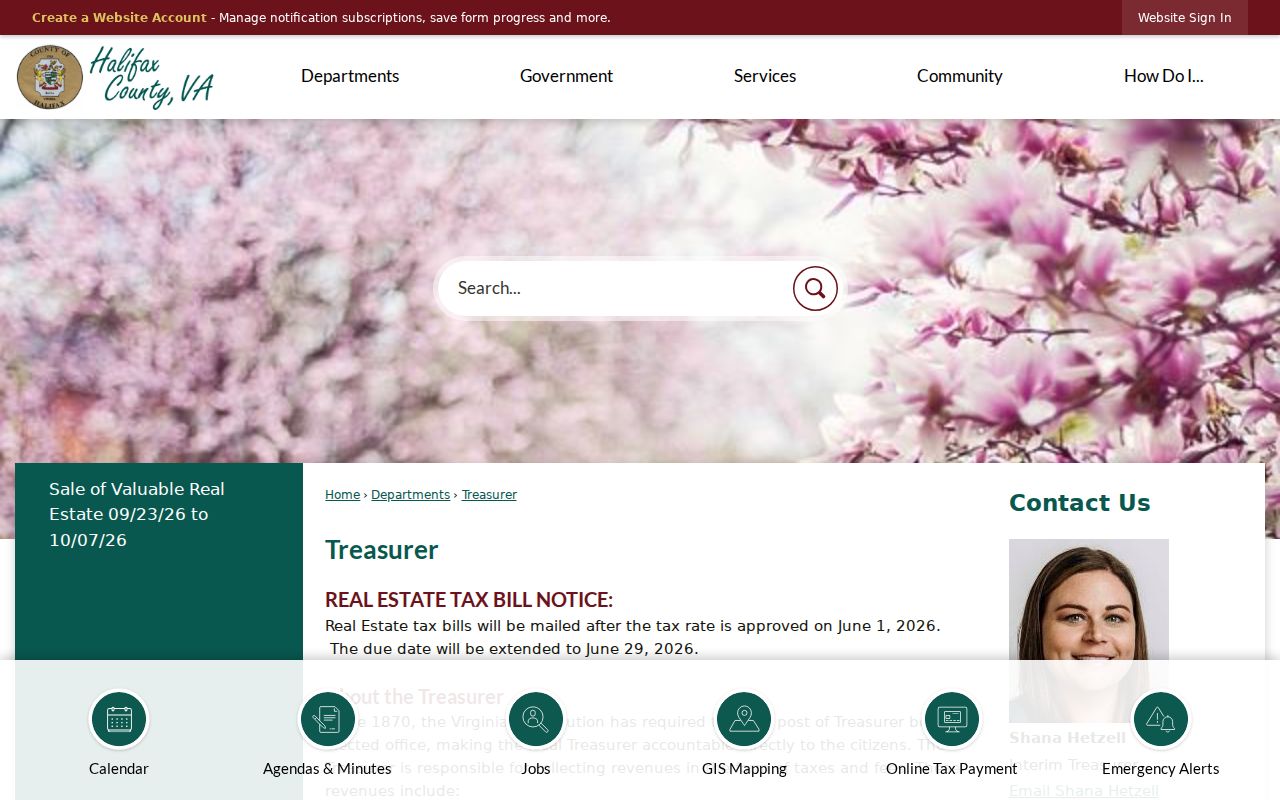
The image points to Halifax County's official route. Open the live gateway before paying, confirm which identifier it accepts, and check whether it shows a current balance. Mailed and in-person questions go to the Treasurer, not the Circuit Court Clerk. The clerk records deeds. The Treasurer collects tax accounts. Keep a receipt that shows the account number and the date you paid.
How Halifax County Assesses Property Tax Values
Halifax County assesses real estate at 100 percent of fair market value. Reassessment runs on a two-year cycle. The assessment office applies that standard uniformly, interprets assessment laws, updates the land book and tax roll, keeps current property information, answers procedure questions, and defends values before the Board of Equalization. Current land-book information is published by September 1. Those dates explain a common confusion. A tax figure does not change the same day a deed or permit does. Land-book details are assessment records. Billing and collection happen through the Treasurer. If the parcel description itself is wrong, treat that separately from a dispute over value. The county's reassessment page states the valuation standard and the biennial schedule.
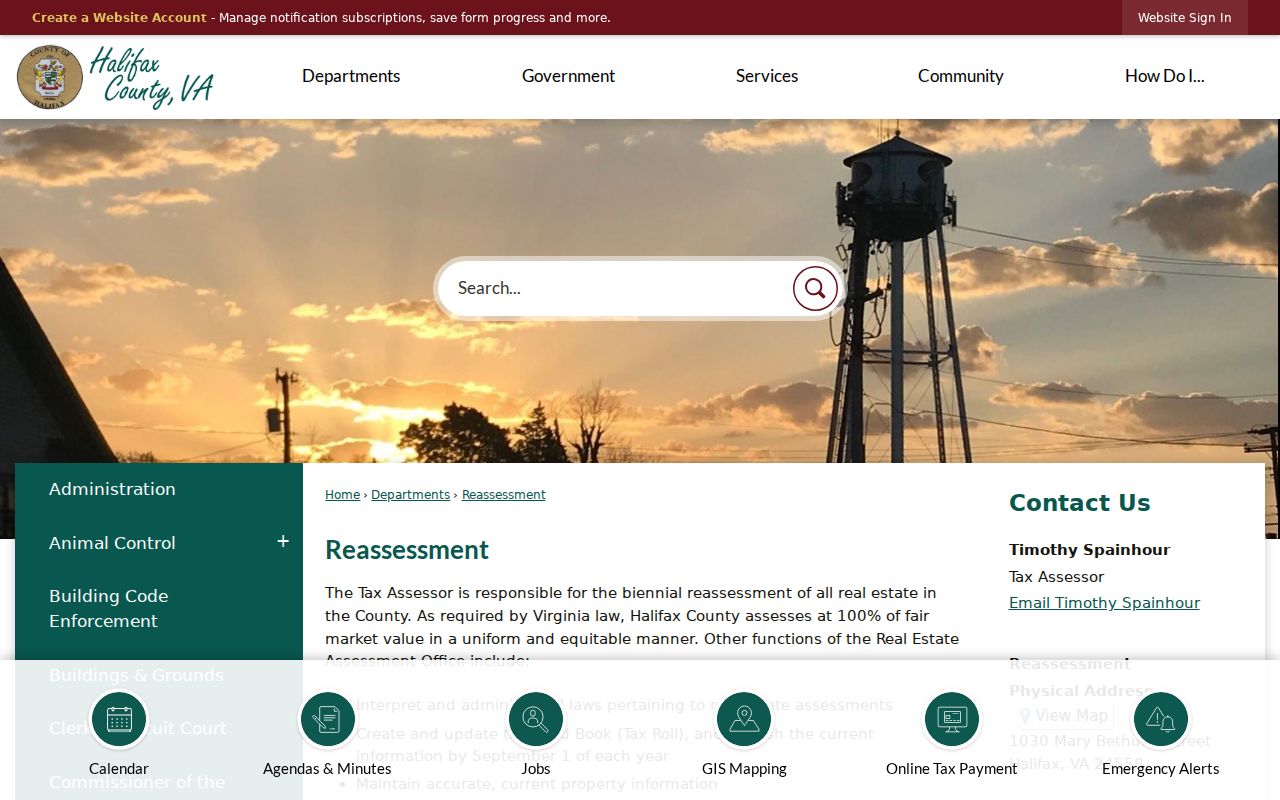
The screenshot points to the official policy page. It shows no parcel card and no date for a specific value.
Halifax County Property Tax Due Dates and 2026 Rate
For 2026, the Halifax County real-estate rate is $0.50 per $100 of assessed value. That figure covers county real estate only. Installments come due June 5 and December 5. Confirm the current bill, and any announced extension, with the Treasurer before payment. A county rate is not a town rate, and the final calculation also depends on the assessment and any relief-program adjustment. Other levies use different numbers. Personal property sits at $3.85 per $100 for 2026, and machinery and tools at $1.26, the latter based on 50 percent of original capitalization costs. Neither matches the real-estate rate. The Treasurer collects more than one levy, so the payment page lists several account types. Choose the parcel's real-estate bill. A vehicle or business property record selected by mistake will not square with the land book. The payment gateway is the county's online payment stop.
The gateway's live instructions matter here. Read them, confirm the account type, and only then submit payment.
Halifax County Town and Halifax County Tax Records
Property inside the Town of Halifax can carry both town and county taxes. A Halifax mailing address proves nothing. It does not place the parcel inside town limits. Check the parcel against the municipal boundary, then ask the town or the county which bills apply. South Boston needs the same care. Its modern parcels are Halifax County-held, even though its historical locality changed between 1960 and 1995. The town FAQ explains local tax and permit routing. Halifax County's building permit form names its own jurisdiction plus the Town of Halifax and the Town of South Boston, with town zoning permits folded in for both towns. That form helps identify the jurisdiction for a project. It is no substitute for a boundary determination. When you compare bills for neighboring parcels, confirm jurisdiction, assessment year, and account class. A single street can cross a town line. Similar-looking addresses can then produce very different local charges, which is exactly what the parcel number and account class are meant to sort out.
Halifax County Property Tax Assessment Appeals
The 2026 Halifax County appeal application gathers the basics first. It wants the owner, the complainant, mailing and email contacts, and the parcel record number. It also asks for the property address and the land type. Then comes the reason for the appeal. Owners can claim overvaluation, undervaluation, or incorrect property-description data. They can also cite lack of uniformity with similar properties, or another reason entirely. A blank explanation area lets the complainant lay out the case. Office-use fields track the mailed date, the received date, and any hearing. Nothing on the form prints a fee or a filing deadline. So ask the assessment office about current rules and dates before submitting.
| Appeal form item | What the applicant should organize |
|---|---|
| Parcel record number and address | Confirm the parcel being appealed |
| Land type | Identify residential, commercial or vacant land |
| Appeal reason | Select the listed ground that matches the record issue |
| Explanation | Describe the value, description or uniformity concern |
| Mailing and email contact | Use the form's requested contact details and current submission route |
Sometimes the problem with an assessment is the property description itself, not the dollar figure. Halifax County treats that data error as a valid appeal ground. When you file, anchor your evidence to the parcel number. A deed description, a plat or map reference, or comparable assessment figures all work well. The form leaves proof standards undefined. So thoroughness helps. The official Commissioner page routes assessment and tax-program matters.
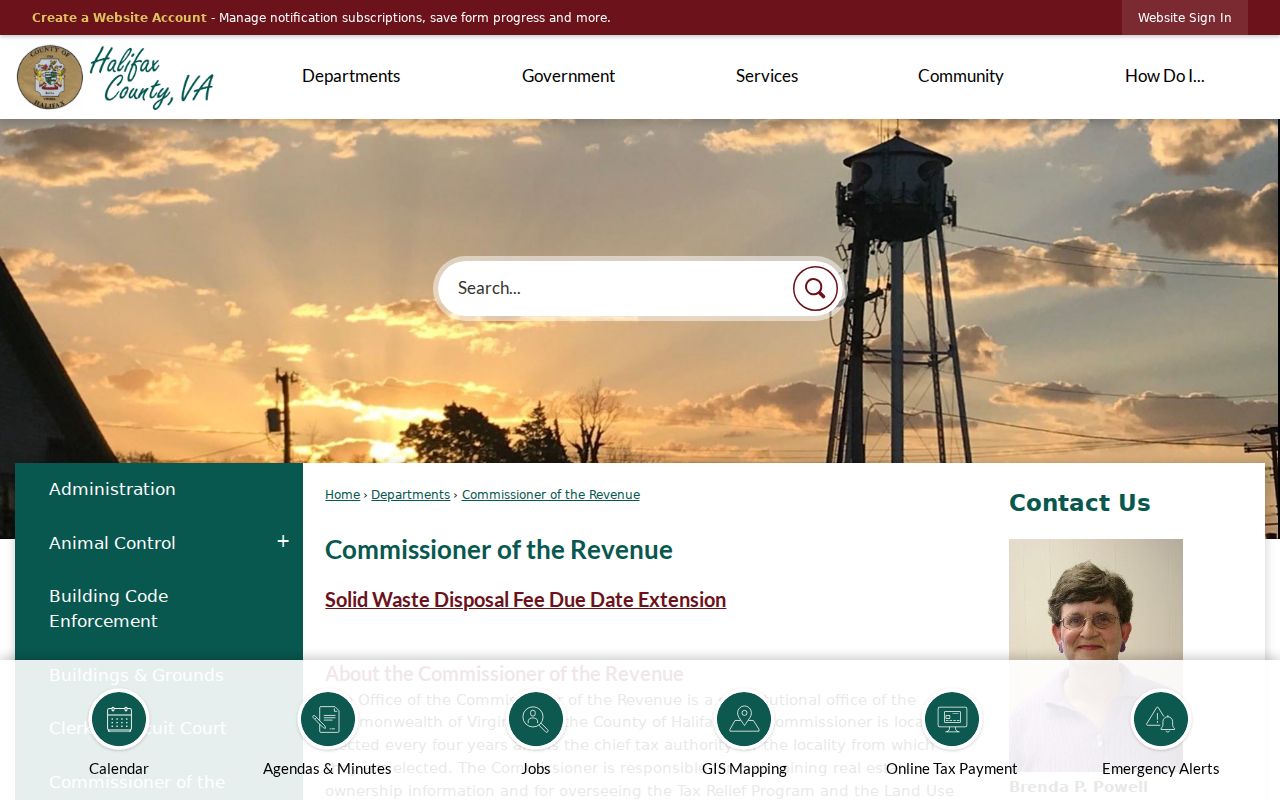
Verify which Halifax County office takes the appeal, and by what date, before relying on any downloaded form.
Halifax County Property Tax Relief Program Rules
Halifax County's elderly and disabled tax-relief program is not a blanket exemption for every owner. It has strict tests. An applicant must be at least 65, or permanently and totally disabled, on December 31 of the prior year. The applicant must also own all or part of the home and live in it on that date. Gross combined income cannot exceed $22,000. Income above $8,500 from non-spouse relatives living in the house counts toward that total. Net worth is capped too. The limit is $60,000. The house and one acre are excluded. A hospital or extended-care stay does not end eligibility if the home is not rented or leased. Disability certification is required when applicable. These rules belong to this one Halifax County program. They should not be stretched to a different exemption, land-use valuation, or an appeal. The Commissioner of the Revenue can explain the application. Ask that office for proof requirements and how income or net worth is calculated, since land-use taxation also routes there while land-book valuation and collection sit with other functions.
How Halifax County Tax Payments Relate to Ownership
A tax receipt proves one narrow thing. It shows a particular account was paid. It cannot establish legal ownership, a complete deed chain, or the absence of liens. An assessment name is an administrative entry. It can lag a deed recorded yesterday. For title, confirm the latest recorded deed with the Circuit Court Clerk. The assessment office handles value. The Treasurer handles the bill. Halifax County property tax records read more easily when the parcel, land-book year, bill period, and payment date stay together. A payment site can show an amount that seems off next to a paper bill, so have the account reference ready. Contact the Treasurer through Halifax County's official page, and avoid assuming a convenience fee, extension, or credit applies until the official account display confirms it.
Limits of Halifax County Property Tax Records
Property tax records exist to support assessment and collection in Halifax County. They are not a market appraisal. They are also not a title report, survey, or permit history. They will not tell you who lives at a parcel. A reassessment can shift the taxable baseline even when the deed never changes. A town tax can layer a separate charge onto the same tax bill. Relief programs add another wrinkle, since eligibility rules govern who actually benefits. Keep these distinctions straight. Budget accordingly whenever you weigh a property or check a parcel number against the tax roll.
Assessment is a tax record. Halifax County's 100-percent fair-market-value standard describes its assessment method. It does not guarantee a sale price or replace an appraisal. Ask the assessor about the land book and the Treasurer about the bill.
Values deserve their own comparison. The separate Halifax County property-value guide explains assessed value, consideration, and sale price without treating the three as interchangeable terms.