
Search Halifax Property Records through Halifax County Seat
The Town of Halifax has no deed recorder or assessor of its own. Halifax County fills both roles. So every property search for a town parcel runs through county systems. Begin in Halifax County WebGIS to locate the parcel. Its record number then opens doors to the land book, the recorded deed, and any local permit questions. Both the town name and the county name can appear in one address. That trips people up. Keep the postal place name separate from the legal jurisdiction. That jurisdiction actually holds the property records.
- Locate the site and parcel in Halifax County WebGIS.
- Ask the Commissioner about land-book ownership and assessment timing.
- Check the Circuit Court Clerk for the recorded deed and any cited plat.
- Confirm Town of Halifax zoning or permit routing when local rules apply.
- Ask the Treasurer whether town and Halifax County tax accounts both apply.
This page centers on courthouse access, jurisdiction, and local history for the town. The wider Halifax County lookup guide covers the shared search mechanics in depth.
Where to Find Halifax Property Records
Halifax County holds the property records for this town. The Circuit Court Clerk records land instruments like deeds. The Commissioner and assessment office maintain ownership details and the land book. The Treasurer bills and collects, while Halifax County GIS maps each parcel. Town of Halifax offices add routing for local taxes and permits. The town itself publishes no separate recorder, assessor card, or public permit database, so the county is the custodian that matters for recorded ownership.
Halifax County Record Custodians
Halifax County holds the deed, land-book, tax and GIS records for Halifax town parcels.
Town of Halifax Permits and Zoning
Town rules and routing are described in public town material; a standalone property permit-search system was not located.
Rely on Halifax County sources for recorded ownership. Then check with the Town on local taxes and permits. The town FAQ notes that county and town taxation are separate, so one Halifax County record may not show every charge on a parcel.
Halifax Property Records by Neighborhood and Plat
No official roster of Halifax town subdivisions or neighborhood names appears in the recorded plats. A deed usually identifies a parcel another way. It may cite a legal description, a book and page citation, or a metes-and-bounds tract. That citation is the reliable path. Ask the Circuit Court Clerk for any plat an instrument references. Do not trust an informal neighborhood label. Halifax County WebGIS can orient you to the parcel's location. The recorded document, though, carries the lot description that counts.
| Local clue | Verified record context | Search use |
|---|---|---|
| Halifax County-seat parcel | The Town of Halifax is Halifax County seat | Use Halifax County custodians and town routing |
| 24558 mailing label | ZIP boundary crossings were not verified | Confirm situs and jurisdiction separately |
| Recorded subdivision name | Exact town plat names were not verified | Follow deed citations and ask for the sheet |
| Bannister River Dam context | The dam is in the Town of Halifax | Use as a geographic landmark, not a boundary |
Neighborhood names help frame a search, nothing more. A mailing label, a town boundary, and a map layer are three different records, and none establishes a parcel's legal description on its own.
Mary Bethune Street and the Halifax Courthouse
The Town of Halifax is the Halifax County seat, and county administration and courthouse services operate in town. The Circuit Court Clerk sits at 8 S. Main Street, with mail sent to P.O. Box 729. Postal carriers do not deliver to the courthouse street address, a detail worth knowing before mailing a copy order. The Clerk's phone is 434-476-6211, and the office keeps hours from 8:30 a.m. to 4:30 p.m.
Halifax County administration lists 1050 Mary Bethune Street, Halifax, VA 24558, and 434-476-3300. Different buildings do not mean different records. The Clerk holds the recorded deeds, the Commissioner handles assessment and revenue questions, and the Treasurer takes payment questions. Confirm which office keeps a specific instrument before you visit or mail a request.
A compact courthouse town makes in-person research easier to plan. Remote index access and copy rules still depend on whichever office holds the deed or file you need.
Halifax 2020 Census and Local Scale
The Town of Halifax counted 1,118 residents in the 2020 Census. An earlier comprehensive plan estimate put the figure at 1,249 in 2015. Those numbers come from different vintages. Never blend the 2020 count with an older planning figure. Population describes the town's scale and little else. It will not identify a parcel boundary, an owner of record, or an assessed value.
The official incorporated-place roster is the source for the town population figure.
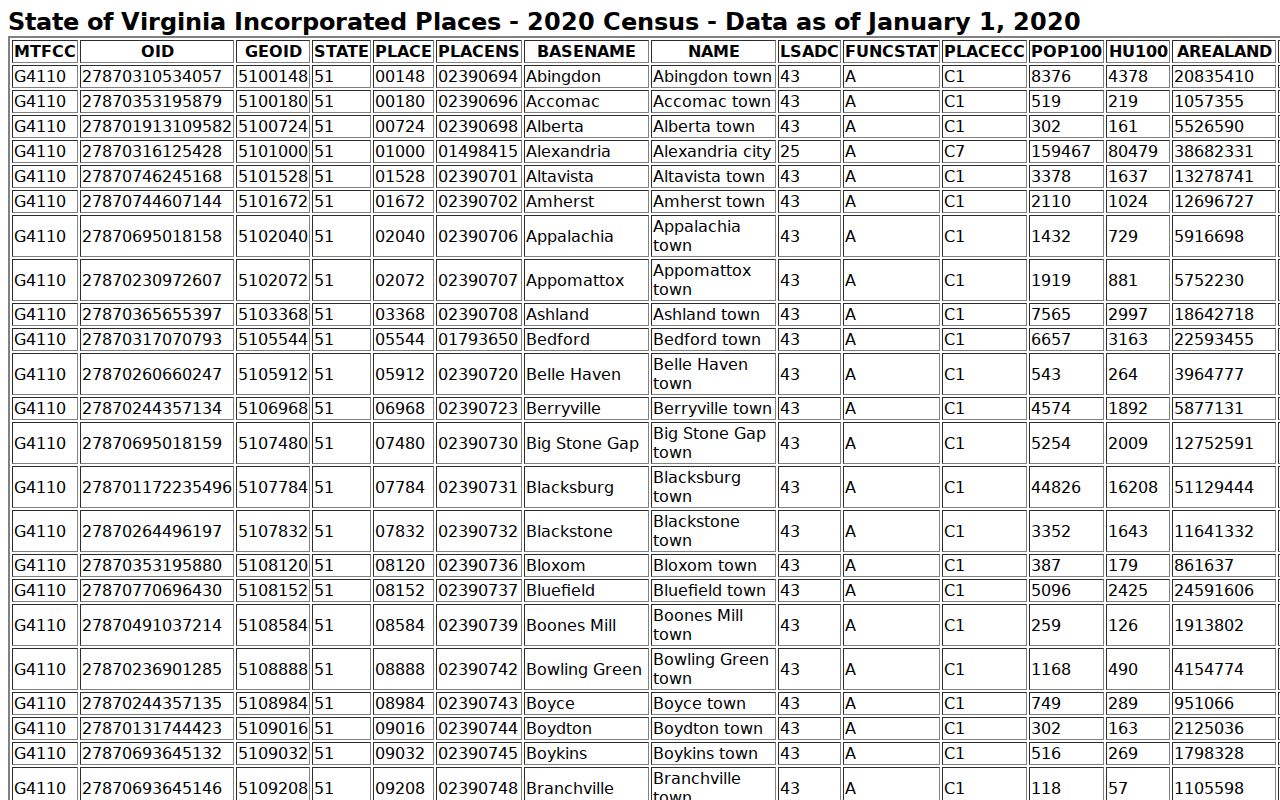
Use a dated census count only when describing local scale. For a particular property, trust the parcel, the deed, and town boundary records instead of a population profile.
How Town and County Tax Routing Works in Halifax
Town and Halifax County taxes can both apply to property inside town limits. That detail comes from the Town of Halifax FAQ. It is a jurisdiction detail, not a blanket rule for every county address. First confirm the parcel sits within the Town. Then ask the Town and the Halifax County Treasurer which tax bills apply. A Halifax mailing address alone cannot settle the boundary question. The Town of Halifax FAQ also covers permit and office routing.
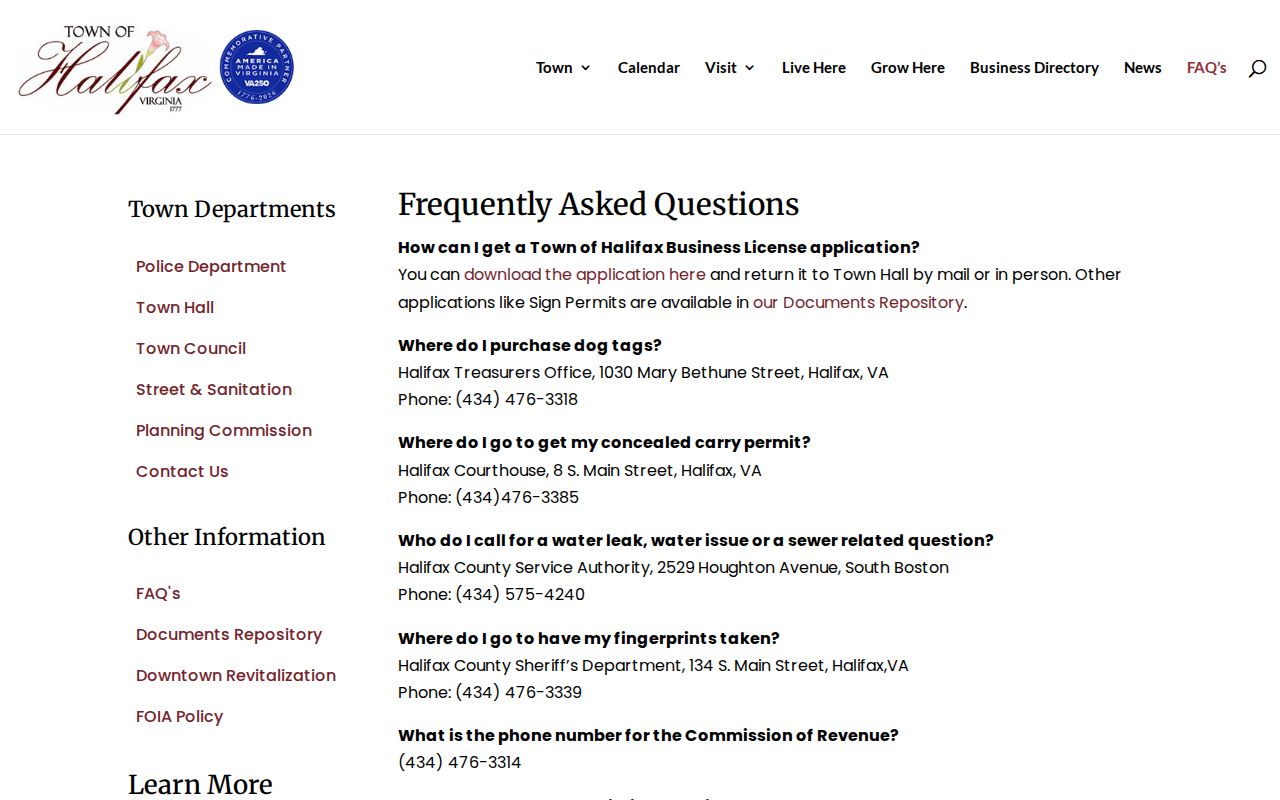
The FAQ is a routing source, not an account-specific bill. Confirm the current rate, amount, and due date with the proper Treasurer or Town office.
Halifax County real-estate installments in 2026 fall due June 5 and December 5. A town levy may be separate. A county payment receipt does not settle every local charge.
Halifax Building Permits and E-911 Addresses
One Halifax County building permit form covers three jurisdictions. You can select Halifax County, the Town of Halifax or the Town of South Boston. A zoning permit comes bundled in for Town of Halifax projects. The application asks for the project address, the parcel record number, zoning, election district, total acres, conditional use, project type and utilities. That makes it a handy bridge between a new E-911 address and its parcel record. New addresses are issued after a building-permit application.
The Halifax County forms page is the confirmed route for applying. It says to allow at least 10 business days for a building permit. The Town of Halifax publishes no standalone searchable permit database. To find a completed local permit record, ask Halifax County building officials. Or ask the Town which office keeps it. Remember what an application is, though. It records proposed work and site details. It is not proof the work was finished or that every approval still stands.
Chaffin House and Halifax Property Records History
Chaffin House sits at 110 Mountain Road in Halifax. It serves as the Halifax County Historical Society's research center. Hours run Thursdays from 10 a.m. to noon, with visits at other times by appointment. The society holds documents, maps and books on civic, religious and historic events stretching from the county's establishment to the present. Its architectural history spans 523 pages. It includes more than 1,300 illustrations covering tobacco, textile mills, churches, schools and historic districts. For research requests and hours, see the Historical Society research page.
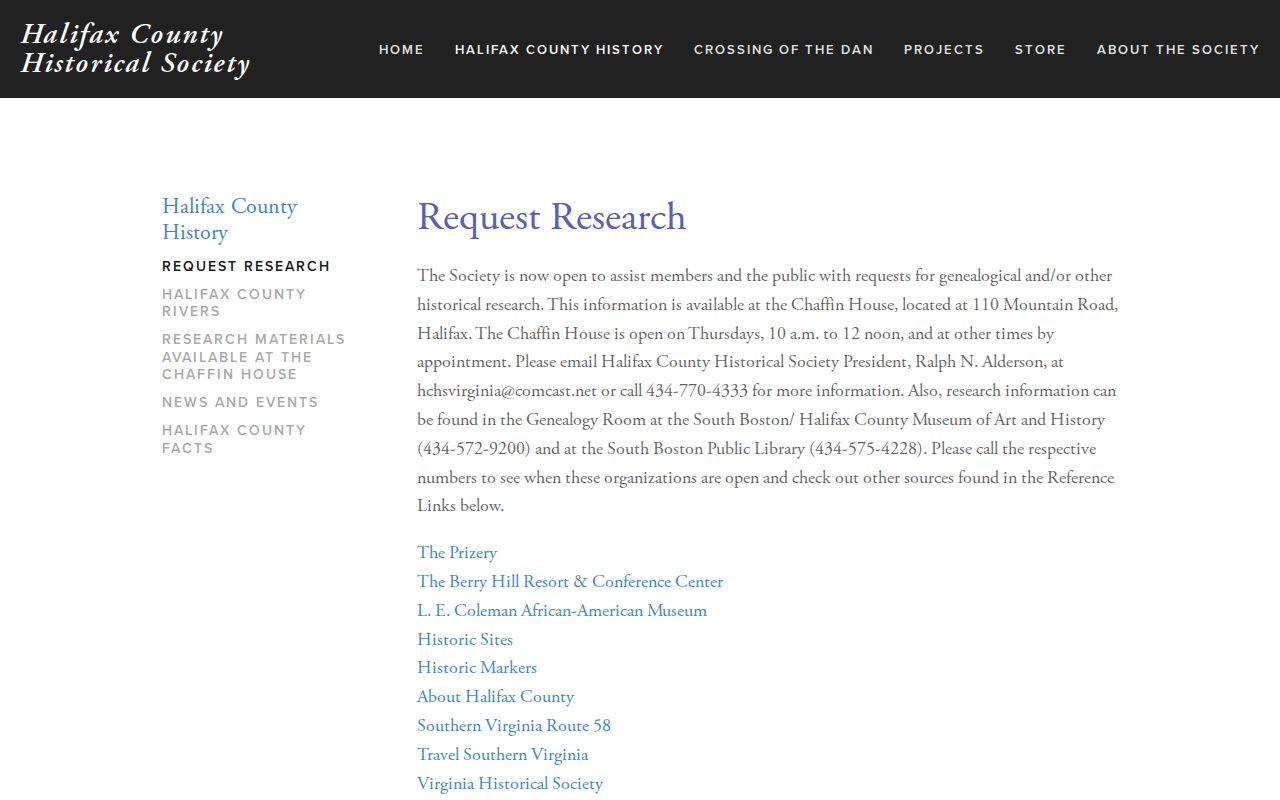
Local history can help identify an older structure, road or institution that appears in Halifax County property records. Confirm any ownership claim against the Circuit Court Clerk's recorded instruments.
Halifax Property Records on WebGIS
Halifax County WebGIS orients Halifax town property through parcel, aerial and zoning layers. The county cautions that the data is informational and continuously updated. It is not a legal description. Treat a map outline as a starting point. Never treat it as a survey or proof of title. If an address will not resolve, ask Halifax County directly. Then check the live interface's current search fields.
Bannister River Dam sits in the Town of Halifax. It is a useful landmark within the county's wider map. Its placement does not settle nearby parcel ownership or a zoning edge. For a lot or boundary question, follow the deed's legal description. Then pull the recorded plat.
Halifax Property Records and the Reassessment Cycle
Halifax County assesses real estate at 100 percent of fair market value. Reassessment happens every two years. Current land-book information is published by September 1. Those rules reach every parcel countywide, including those in the Town of Halifax. An assessment is a tax record. It is not a guarantee of a sale price. When an older deed states a different amount, keep the deed's consideration and the assessment as separate figures. Each has its own date.
The assessment office can explain the land-book year behind a value. The Treasurer handles the tax bill. A Town of Halifax charge may apply separately. Never lean on a map estimate in place of an appraisal. The same goes for a tax balance or an old sale figure.
Limits of Halifax Property Records
Halifax property records live with Halifax County for deeds, assessments, taxes and parcels. Town materials add zoning and local tax context. They do not prove who lives at an address. They do not guarantee a complete title chain or settle a physical boundary. Keep the parcel number and legal description attached to each record you gather. Then confirm jurisdiction with the office that actually holds the record.
Use the record for its purpose. A map is not a survey, an assessment is not an appraisal and a tax receipt is not proof of title. Use public records for lawful research and do not target or harass an owner.
When a record matters, obtain it from the custodian. Retain its date and citation. Route questions by office: the Clerk for deeds, the Commissioner for the land book, the Treasurer for bills, and the Town for local matters.