
What the Halifax County Current Owner Record Means
The current owner question in Halifax County starts with the name in the real-estate land book. Then you check the latest recorded deed. The Commissioner of the Revenue maintains ownership information. The Real Estate Assessment Office updates the Halifax County land book. It publishes current information by September 1 of each cycle. The county offers no separate public assessor property card online. Because of that, a caller should confirm the right field. Check which owner, mailing, situs or sale field is on the screen. Ask what date it reflects.
| Source | Owner detail it may answer | How current it may be |
|---|---|---|
| Land book / assessment office | Owner carried for local assessment | Published by September 1; updated on a two-year cycle |
| Recorded deed | Grantor, grantee and transfer instrument | Recorded at the Halifax County Circuit Court Clerk; check newest instrument |
| WebGIS | Parcel location and map context | GIS updates over time; informational |
| Treasurer account | Bill and payment record | Account-specific; not proof of title |
A land-book name is an administrative owner-of-record clue. A deed is the recorded conveyance itself. That distinction matters when a recent transfer, an estate, or an entity name has not yet reached every Halifax County system.
Confirm the Halifax County Current Owner Against the Halifax County deed
Start from the parcel number or address. Ask the Commissioner about the current land-book entry. Then search the Circuit Court Clerk's grantor-grantee index for the newest conveyance. Compare the grantee name, instrument date, book and page, and legal description. Check these against the mapped parcel. The assessment record may look newer or older than the Halifax County deed. Keep both dates. Then ask the appropriate office whether a correction or update is underway.
The Circuit Court Clerk sits at the courthouse at 8 S. Main Street, open 8:30 a.m. to 4:30 p.m., at 434-476-6211. Mail requests go to P.O. Box 729, Halifax, VA 24558, since ordinary mail is not delivered to the courthouse itself. The official SRA service may offer remote index or image access. This depends on local authorization and subscription. Call ahead about the online index cutoff and current image fee. Do this before relying on any remote result.
The Commissioner page describes the ownership and assessment functions of that office.
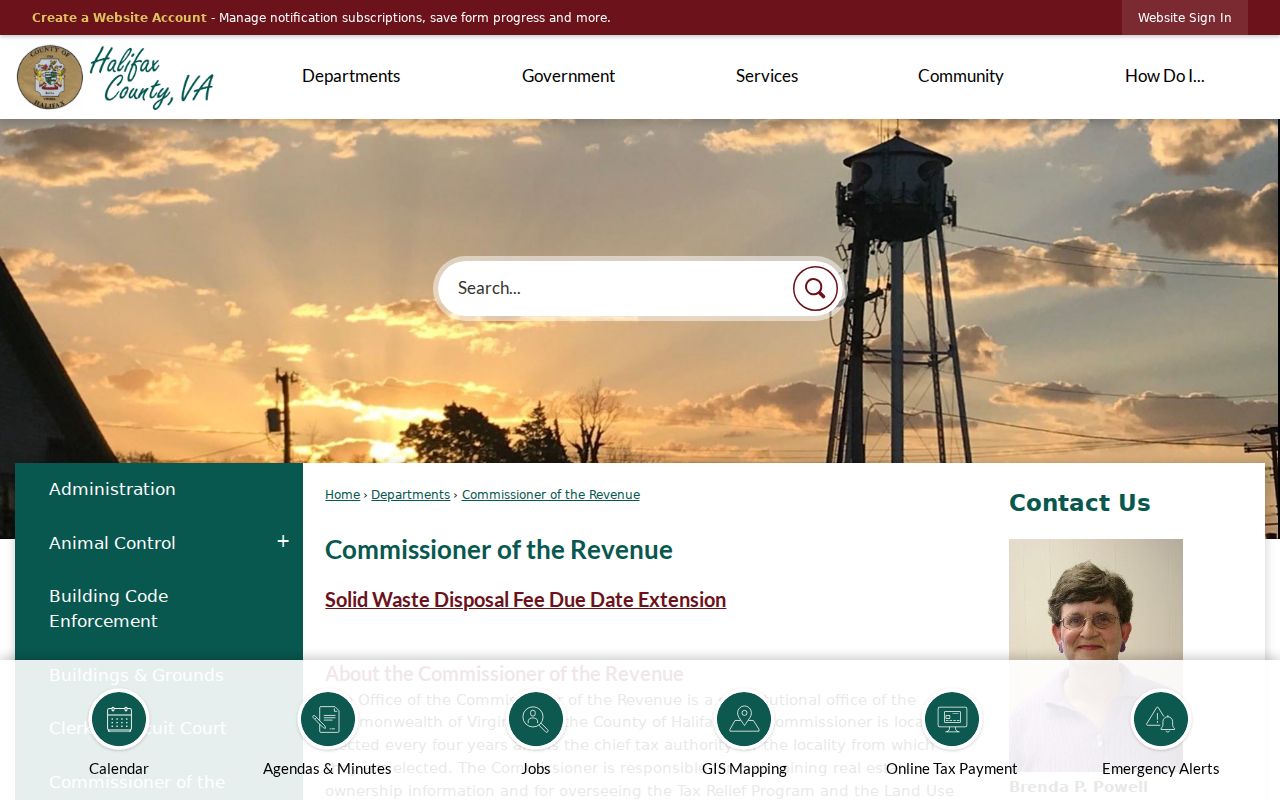
The page displayed is an office overview rather than an owner card. Contact the department for the exact land-book field and its date.
Halifax County Current Owner Information Follows a Reassessment Cycle
Halifax real estate is reassessed biennially at 100 percent of fair market value. The assessment office publishes current land-book information by September 1. That biennial cycle creates a timing gap. A Halifax County deed can name a new owner well before a later land-book update appears. Other changes land on yet another schedule. When one source seems stale, do not paper over it with a guess. Ask the office that maintains that record about its update timing.
The assessment office also interprets assessment laws. It maintains property information and presents values to the Board of Equalization. Those duties support the Halifax County land book. They do not turn the assessment page into a title search. The Circuit Court Clerk remains the legal land-record custodian. A dispute about the person named in a deed may send a title professional back through earlier instruments. Estate records may enter the picture too.
Keep the owner-of-record entry together with its tax year or publication date. A current screen helps only when the date and record type are clear.
Halifax County Current Owner, Mailing Name and Situs Differ
An owner can receive mail somewhere other than the parcel situs. A trust, business entity, or estate may sit in the grantee line. A rural site can carry a new E-911 address. Older records may still use a road or community description. These are separate fields and separate clues. Halifax's official pages label no card with owner, mailing, situs, and last-sale fields. Call the Commissioner to confirm the exact terms and how each one updates.
The Halifax County permit application asks for a project address and parcel record number. It also asks for zoning, election district, and acreage. New E-911 addresses follow a building permit application. That relationship can tie a fresh address to a parcel. Still, the application proves neither completed work nor legal ownership. A ZIP code or mailing town is not a boundary determination either.
When a Halifax County Current Owner Is an LLC or Estate
A deed may vest title in a limited liability company. It may also name a trust, an estate, or another entity. The Virginia State Corporation Commission's Clerk's Information System can help locate business filings for an LLC. It cannot establish the parcel owner on its own. It also does not identify every beneficial interest. Rely on the recorded deed and land-book entry for the property record. Treat entity filings as a separate research source.
A named owner may have died. The Circuit Court Clerk also holds wills and probate filings. An estate record can explain a successor name. A will or obituary, though, does not itself change the land record. Confirm the operative conveyance or other instrument. That step keeps a family member, personal representative, or bill contact from being mistaken. None of them is automatically the current owner of record.
Write down whether the source shows an individual, joint parties, or a named entity. Exact styling can matter when searching a grantor-grantee index.
Halifax County Owner Alerts Do Not Replace the Current Owner Record
Virginia runs a Deed Alert service. It can notify a subscriber when certain names show up in recorded land documents. Halifax County promoted it in March 2026. It is handy for watching a name. Still, it is not the owner-of-record field itself. It cannot tell you which parcel a filing touches until you pull the document. Nor does an alert prove a transfer is the newest one. Retrieve the instrument and weigh its description and recording date yourself.
The same caution applies to nearby sources. A Treasurer payment record shows a payer or an account, not title. A WebGIS label is only a mapping clue. Base any current-owner conclusion on the newest relevant conveyance. Check it against the land-book entry the administrative office maintains.
South Boston's Former-City Records Affect Current Owner Checks
South Boston spent 1960 through 1995 as an independent city, separate from Halifax County. Today it is a town inside the county. A current deed search therefore follows the Halifax County Clerk route, but an older transfer may name South Boston as the locality. Keep both names in play if an owner trail crosses the independent-city years. Ask the Halifax County Circuit Court Clerk how the relevant volume is indexed. A modern parcel map does not undo the older record organization.
When the land-book name and a city-period deed disagree, verify each transition one instrument at a time. A town address, a ZIP label and a courthouse location answer three different geographic questions. Rely on the current parcel and its deed chain. Never infer an owner from a place name alone.
Who to Call About a Halifax County Current Owner
Different offices answer different questions about a Halifax County current owner. The Commissioner of the Revenue handles land-book ownership. Its Real Estate Assessment Office covers assessment matters. The Circuit Court Clerk covers deeds, recorded transfers and chain-of-title references. Billing and payments belong to the Treasurer. Halifax County GIS staff help with parcel location and map context. Give each office an address and parcel number when you can. Ask which source date it is using.
The Circuit Court Clerk lists 434-476-6211 and weekday counter hours. Other Halifax County office pages post their own current contact routes. Do not send records with protected personal information through ordinary email. The county's forms page warns users to secure such submissions.
For prior owners, the separate Halifax County former-owner guide walks through the backward deed chain. For a deed image, use the Circuit Court Clerk's route rather than a payment portal.
Limits of Halifax County Current Owner Records
Current owner-of-record information does not tell you who lives at a property. It may lag a very recent recording, a pending estate transfer or an address correction. A land book is not a certified title report. WebGIS is not a legal description. A paid tax account does not prove ownership. Keep the source, date, parcel and instrument citation together, then ask the custodian to resolve any conflict.
Check the recorded instrument. Use the newest deed and relevant prior deeds when ownership matters. A professional title search is needed for a complete legal conclusion.