
Trace Former Halifax County Property Owners One Deed at a Time
Every search for former Halifax County property owners follows the same logic. You begin with a recent deed you can trust. Then you find the earlier Halifax County deed where the current owner received the parcel. You keep repeating that step until the chain reaches the years you care about or the index runs out. Each link in the chain needs a recorded source. A surname, a family story, or a label on an old map is only a lead. The deed records confirm it. Halifax's online deed-index cutoff is not stated publicly. Ask the Circuit Court Clerk which years and books the remote index actually covers.
| Transfer date | Grantor to grantee | Instrument | Book/page or next clue |
|---|---|---|---|
| 2025 sample | See the recorded instrument parties | Deed of conveyance | Parcel 30044; cites Book 701/Page 849 |
| 1998 cited source | Names to retrieve from prior book | Earlier deed | Book 701/Page 849 |
| Earlier link | Follow the prior grantor backward | Confirm type in the index | Continue by cited reference |
The sample deed offers one concrete illustration. It states a $40,000 consideration, references a $19,240 assessment, and describes a two-acre tract by metes and bounds. Those figures and details belong to that single instrument, not to every parcel in Halifax County.
Walking Backward Through the Halifax County Deed Chain
Start with the newest deed tied to the parcel. Write down the grantee, because that person is your next target in the property search. Look up that name in the grantor index. This shows the Halifax County deed where they later sold the same land. Open that earlier instrument and repeat the cycle. When a deed cites a prior book and page, pull that record. Compare the property description against what you already have. Keep walking backward until you reach the period you need or the index simply stops.
- Write the latest deed's date, parties, recording reference and full description.
- Search the grantee as a grantor in a prior date range.
- Compare the cited deed, parcel and legal description before treating it as the same tract.
- Note liens, deeds of trust, satisfactions, estates or parcel divisions that affect the trail.
- Keep a separate note for every unresolved gap and ask the Halifax County Circuit Court Clerk which volume continues it.
A chain of title is just a sequence of transfers. The grantor conveys. The grantee receives. A quitclaim deed passes whatever interest the grantor happens to hold. It lacks the warranty protection a warranty deed carries. Index entries alone are never a complete title opinion. Examine each deed records instrument yourself.
Halifax County Online Coverage Has a Known Gap
No official source states the earliest year in Halifax's online deed index. Resist the temptation to borrow a start date from another Virginia locality, because coverage varies widely. Instead, ask the Circuit Court Clerk about SRA coverage: the earliest searchable index, which document types are included, and whether older deed books sit at the courthouse or survive on microfilm. A general state portal can include participating records without matching start years or image permissions in every Halifax County office. The Halifax County Circuit Court Clerk sits at 8 S. Main Street, Halifax, though ordinary mail is not delivered there. Direct postal requests to P.O. Box 729. The office phone is 434-476-6211, with hours from 8:30 a.m. to 4:30 p.m. Confirm the correct series before ordering copies or making the trip. Index access and image access are separate things. The SRA index may be free if Halifax has enabled that option. Viewing document images requires local authorization, a signed agreement, and any applicable subscription fees.
Book 701, Page 849 Is a Halifax Chain Link
Halifax County's sample 2025 deed cites an earlier instrument at Book 701, Page 849. That citation is your direct lead. Pull the earlier book entry. Note the grantor and grantee. Compare the legal description, and follow its own prior reference to keep the chain moving. The sample's parcel number 30044 can help orient the property search. But a parcel identifier never replaces the recorded calls or proves an older tract is identical. The 2025 instrument describes two acres by metes and bounds. Those courses and distances can hold a chain together. Even road names or addresses may have changed since. Keep any referenced plat filed with its Halifax County deed. A parcel can be split, merged, or partly conveyed. Note exactly which description carries forward rather than assuming the whole parent tract passed intact. The sale consideration and the assessed value differ in the sample deed. That gap is not a missing transfer. The deed and the land book simply answer different questions about the same property.
South Boston's Former-City Index Period Affects Former Owners
South Boston spent 1960 through 1995 as an independent city. It then returned to Halifax County as a town. A transfer recorded during those years may sit under the South Boston label. It may not sit under Halifax County instead. When a chain crosses that transition, keep both locality labels intact. Ask the Halifax County Circuit Court Clerk how the historical volumes are organized. A modern parcel lookup will find the current tract, but it may not reveal how an older city-period deed was filed. This is an index problem, nothing more. The need to compare legal descriptions and instrument citations never changes. A family name tied to South Boston may surface in a town or Halifax County history. Yet only the recorded deed records establish the true conveyance path.
Microfilm Extends the Search for Halifax County Former Owners
Halifax County formed from Lunenburg in 1752. That founding date is a fact of history, not a promise of online coverage. The Library of Virginia holds microfilm and original Halifax County records. Its catalog is the place to find them. When the SRA search stops short of the transfer you need, the Halifax County Circuit Court Clerk can tell you which deed-book volumes or microfilm carry the deed chain further back. Local history collections add another layer, connecting older names to places and roads. The Halifax microfilm catalog at the Library of Virginia is the archival starting point. Use it for this work.
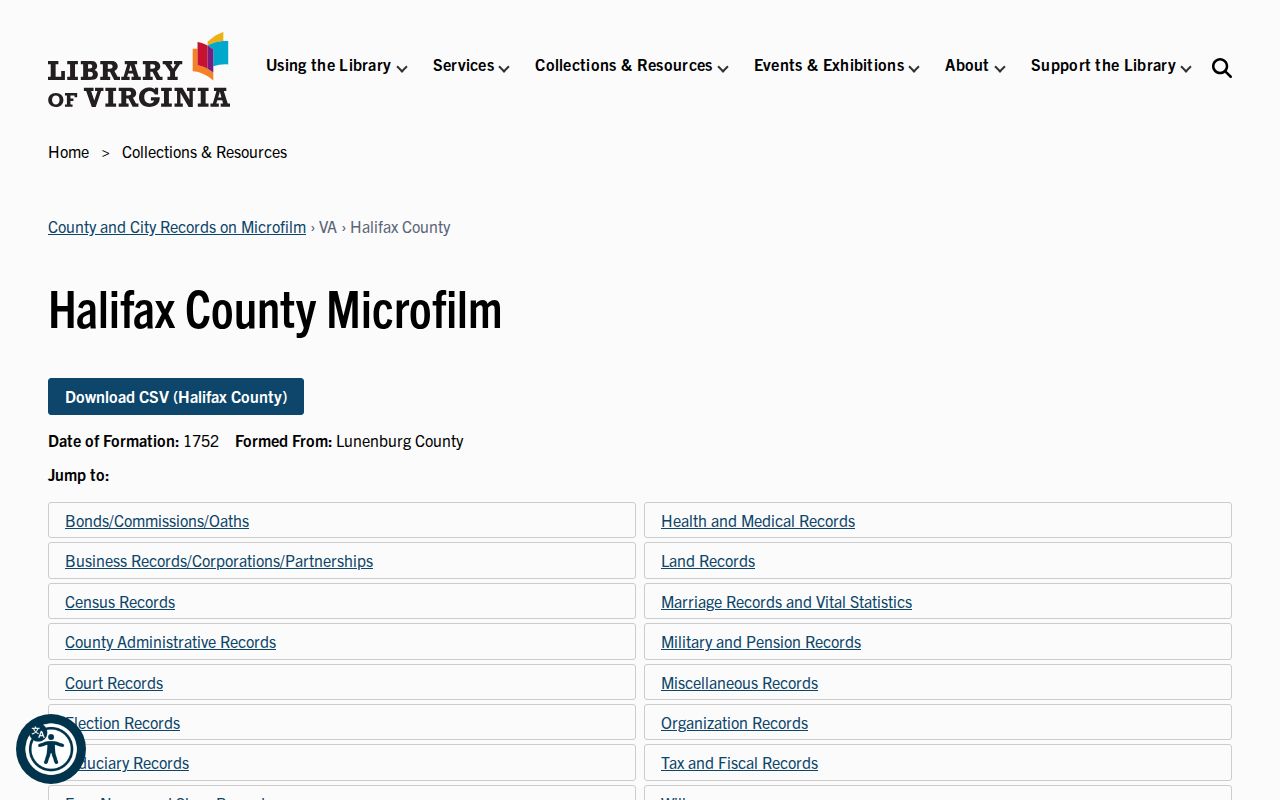
Treat the catalog as a map, not the answer. Identify the materials first, then confirm ownership in the deed books themselves. A 1924 Halifax County history, WPA Virginia Historical Inventory material in the Halifax library collection, and the Chaffin House research holdings can yield leads such as a road or community name worth chasing.
Local Archives Help Identify Earlier Halifax Owners
Chaffin House, at 110 Mountain Road in Halifax, serves as the Historical Society's research center. Hours are Thursdays from 10 a.m. to noon, with visits at other times by appointment. The society's documents, maps and books cover civic, religious and historic events. Coverage runs from the county's establishment onward. Its architectural history describes tobacco heritage, textile mills, churches, schools and historic districts. These materials can match an old structure or locality to a name. They cannot prove present title. The South Boston-Halifax County Museum Genealogy and Research Center reports more than 1,500 books. It also reports 2,000 archival materials, manuscripts and files. Coverage spans Halifax, Southside Virginia and parts of North Carolina. A batch of its historic papers was reported as sent to the state library for preservation and digitization. Check current access status before planning around them. The society's research page gives its request route and public hours.
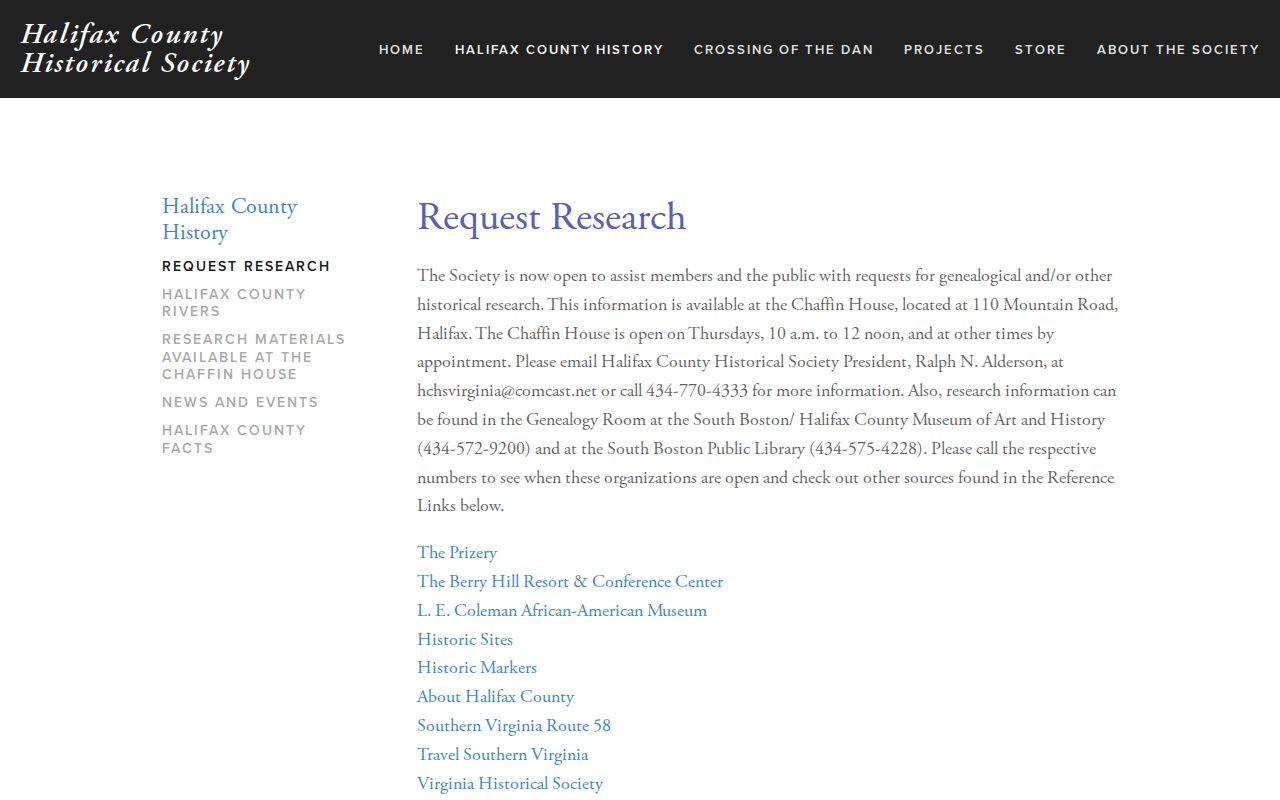
Let the archives point you toward an instrument. Then cite the Halifax County Circuit Court Clerk's book and page for every transfer.
Probate and Vital Records Can Point Toward Former Owners
The Circuit Court Clerk holds wills and probate filings. These filings can explain how an estate passed. A will, obituary or family record may suggest a successor's name. It does not prove the parcel was conveyed. Find the recorded instrument that changed the land interest and follow the grantor-grantee trail. Probate can also resolve spelling or family relationships when deed names blur together. Virginia keeps birth and death records public after 100 years. Marriage and divorce records become public after 25 years under the cited state rule. State holdings include surviving birth and death records from 1853-1896 and records from June 1912 forward. Marriages begin in 1853 and divorces in 1918. The Library of Virginia offers historical research routes. The Virginia Department of Health handles certified copies and requires eligibility, identification and payment for current records. Treat vital records as identity context only. They do not replace a deed, estate conveyance or title review. The Virginia case-information page is a separate route for eligible court case context. It is not a land-deed index.
Use a case result as context for a probate or court-file question. Verify the property transfer itself in the Halifax County Circuit Court Clerk land records. The Virginia Department of Health access page explains certificate requests, identification and public periods.
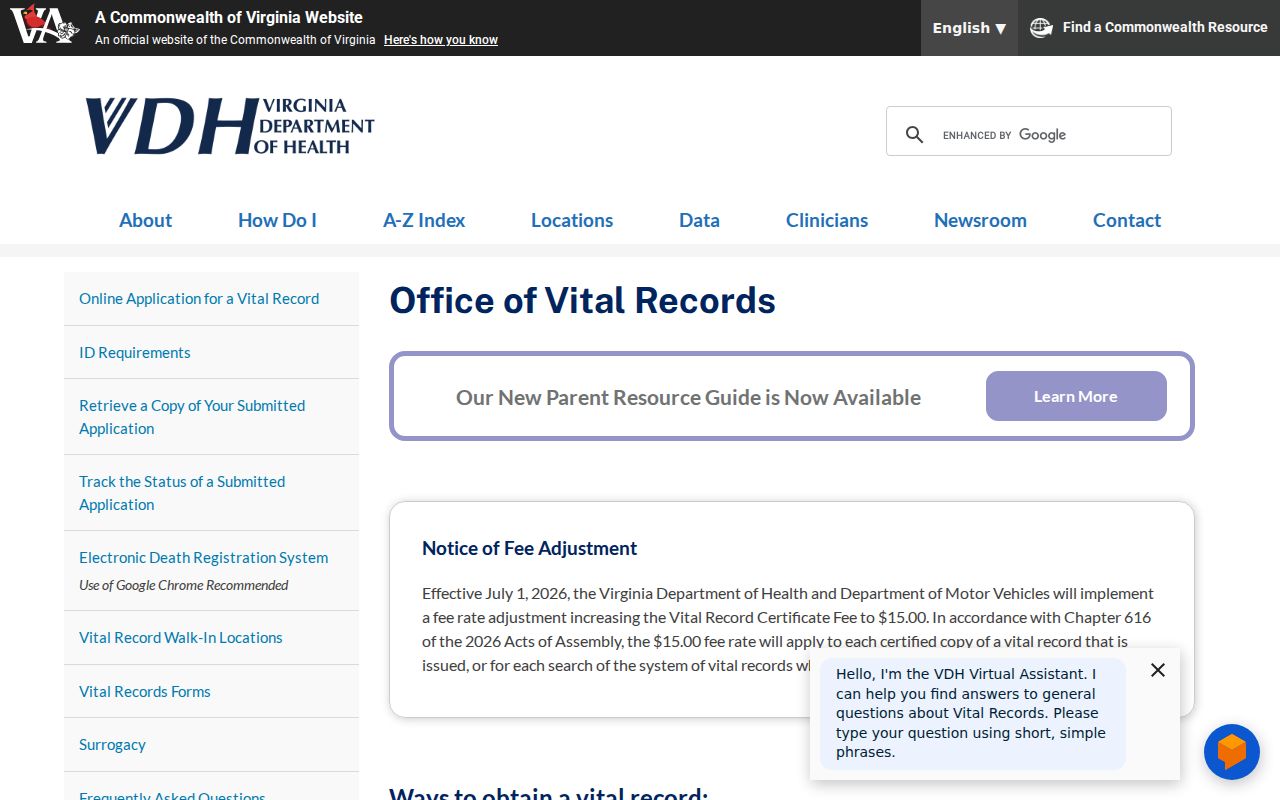
Current vital certificates carry eligibility and proof rules, so turn to archival resources for family history work.
Former Halifax County Owners May Appear under Different Names
Older indexes can show initials, alternate spellings, family names, married names or a business entity. Search the likely variants. Record each form exactly as it appears in the source. When a deed transfers to an LLC, the Virginia SCC business search may offer an entity filing lead. It is not evidence of property ownership. If an owner died, keep the estate, the personal representative and the heirs distinct. Separate them from the grantee in any later deed. Log each link as a row with date, instrument type, grantor, grantee, book/page and a description clue. A citation table exposes the gaps. Look for a missing prior book, a parcel that splits, or a chain that jumps to an independent-city index. Never bridge a gap by assuming family members or adjoining owners were the same party.
How Far Back Halifax County Former Owners Can Be Traced
Halifax County formed in 1752 and archival holdings exist. But the online index cutoff remains unverified. The answer depends on the county's deed-book coverage and the parcel's own chain. Start from the latest deed and follow its cited references backward. Ask the Halifax County Circuit Court Clerk for the book or microfilm path where the remote search ends. Probate, partial conveyances, name changes, subdivisions and South Boston's 1960-1995 independent-city period can all complicate a chain.
Chain limit. A list of former names is not a title opinion. Confirm every transfer in a recorded instrument and ask a qualified title professional to assess legal effect and completeness.
For access to a single instrument, the Halifax County deed records guide is the place to go. This page instead follows prior owners backward and keeps the chain clear.