
Start with a Halifax County Property Records Search
A Halifax County property-records search works best as a sequence, not a single lookup. Start with an address or a name. Halifax County WebGIS then connects that location to a parcel. The Circuit Court Clerk's land records confirm the ownership trail after that. The Commissioner of the Revenue maintains real-estate ownership information, and the assessment office builds the land book. The Treasurer handles payment. These offices overlap, yet each answers a different question. An address points toward a parcel, an assessment names an owner of record for local purposes, and a recorded deed documents the transfer itself.
No single record is a title opinion. For a general route, the Halifax County property search guide walks from address to parcel to the right public office. Tax questions go to the Treasurer's account instructions once the parcel is known. Write down the parcel number. Add the legal description, deed book, and page. Note the date each source was checked. Those notes make it far easier to reconcile records that were updated at different times.
- Locate the address or parcel in Halifax County WebGIS and write down the parcel record number shown for the property.
- Ask the Commissioner of the Revenue about the land-book owner and assessment fields if a clear card is not available online.
- Search the Halifax Circuit Court Clerk's index for the most recent deed and read the grantee, date, book and page.
- Use the Treasurer's instructions for the real-estate account, keeping personal property and other bill types separate.
- Check the GIS map and any referenced recorded plat for context, then ask the custodian for an official copy when needed.
This order avoids a common dead end. A map can show where a parcel sits, but it cannot prove who holds title. A tax bill shows an account, not a deed. When a property has a long history, keep spelling variants and old locality labels in play.
Offices Behind Halifax County Property Records
Halifax County property records sit with several custodians. The Circuit Court Clerk records deeds, deeds of trust, judgments, wills, and related instruments. The Commissioner of the Revenue maintains real-estate ownership and tax-program information, while the Real Estate Assessment Office prepares and updates the land book. The Treasurer collects real-estate taxes. GIS staff support mapping and E-911 addressing. The courthouse sits in the Town of Halifax, though South Boston is the larger incorporated place. A town address creates no separate deed office. Every one of these offices serves the whole county.
Halifax Circuit Court Clerk
8 S. Main Street, P.O. Box 729
Halifax, VA 24558
434-476-6211, weekdays 8:30 a.m. to 4:30 p.m.
Commissioner and Assessment Office
Halifax County ownership, land-use and assessment information
For an official owner or assessment field, contact Halifax County office directly.
Treasurer
Real-estate billing, due dates and payment instructions
Choose the real-estate account type when using Halifax County-linked payment service.
The clerk's listed courthouse address is not a postal delivery address for ordinary mail. Use P.O. Box 729 instead. Confirm current instructions before mailing payment or documents. That one detail decides whether your request arrives. The clerk's phone and counter hours also matter when a remote index lacks the image you need.
Halifax County Property Records Begin with a Parcel Map
Halifax County WebGIS is the practical first stop. Many searches begin with a house, road, or tract rather than a parcel number. The county describes its mapping as a service for citizens and departments alike. It covers parcels, zoning, and aerial information. High-resolution aerial imagery forms the base. That visible base keeps things distinct. It separates a rural tract from a nearby road, river, or town area. It can also tie an address to a parcel identifier. The map is a locator, not a recorder of ownership.
Halifax County's GIS and E-911 page explains the mapping service and its limits. Use it for planning.
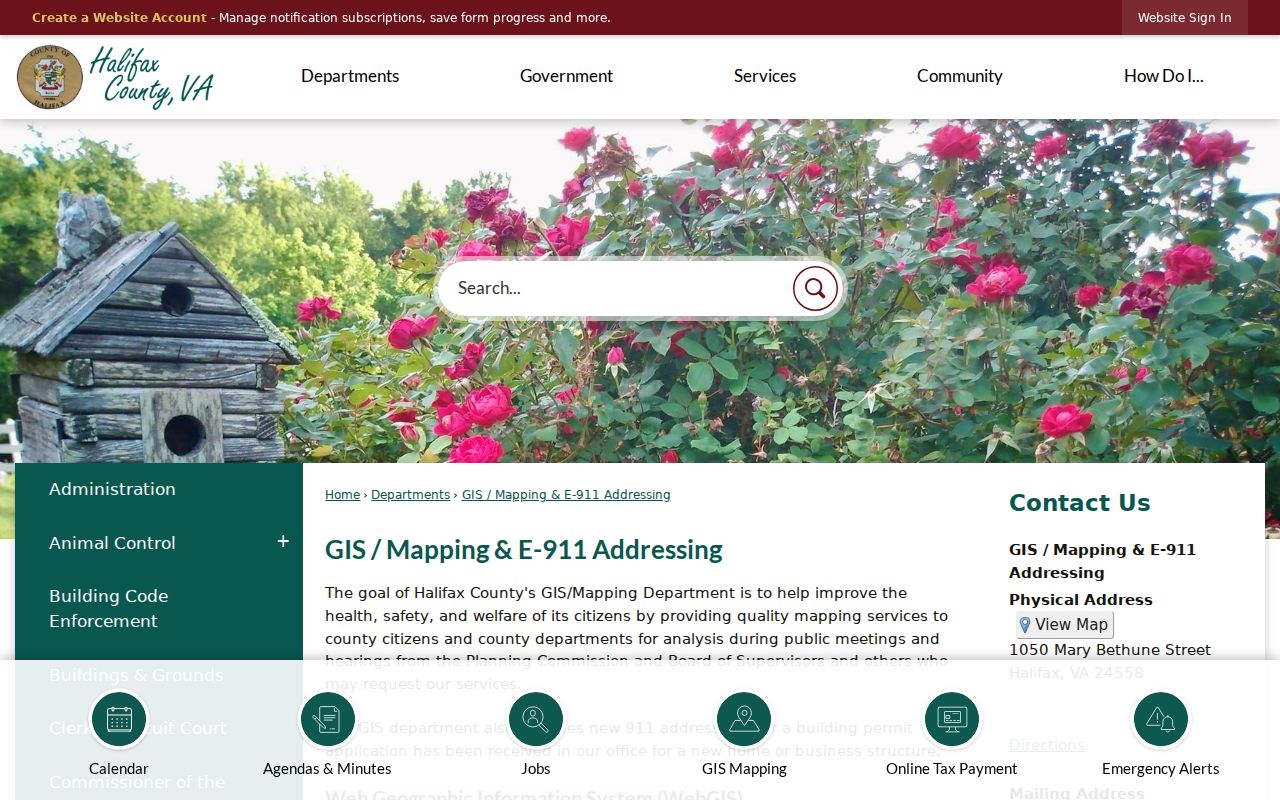
Halifax County cautions that GIS data changes over time. The map is not a legal description. The county itself says the lines should be independently verified. A recent update date does not turn the map into a survey, either. Use it to identify a record, nothing more. Confirm boundary wording in the deed. When a line on the ground matters, bring in a licensed surveyor. The map still earns its keep for comparing parcel shapes, spotting nearby public routes, and locating a tract within Halifax County. Its own disclaimer, though, governs how far that view can be trusted.
Record Types Inside Halifax County Property Records
Each record set captures a different event or public function. Halifax County property records span legal instruments at the Circuit Court Clerk, ownership entries in the land book, and tax bills kept by the Treasurer. They also include value entries tied to each parcel. WebGIS adds the geographic layer. Planning and building forms contribute another view of proposed work, zoning jurisdiction, and site details. A complete answer often takes two or more record types. Match them by parcel number, deed reference, or legal description.
| Record | What it can establish | Custodian or route | Limit to remember |
|---|---|---|---|
| Deed and deed of trust | Recorded transfer terms, parties, consideration and encumbrance instrument | Circuit Court Clerk; SRA where enabled | Check the full instrument and later releases |
| Land book and assessment | Ownership and assessed value maintained for local taxation | Commissioner / Real Estate Assessment Office | Not a title certificate or sale appraisal |
| Real-estate tax account | Bill, due date and payment status | Treasurer and Halifax County-linked payment service | A paid bill does not prove title |
| Parcel map and plat | Parcel geometry, map context and recorded lot description | WebGIS; deed and plat books at the clerk | GIS lines are informational |
| Permit application | Project, site, parcel record number, jurisdiction and utility details | Halifax County forms and building officials | A form is not proof that work was completed |
For a transfer, the deed is central. Taxable value comes from the assessment office. Payment questions belong to the Treasurer, while location questions call for WebGIS and the recorded legal description side by side. The Halifax County deed-records guide explains the clerk's index and copy path.
Halifax County Property Records and the Biennial Land Book
Halifax County puts real estate on the tax roll at full fair market value. It reassesses every two years. The Commissioner of the Revenue handles the appraisal side. That office reads the assessment laws and keeps the land book current. It also maintains parcel information, fields process questions, and defends values in front of the Board of Equalization. The current land book publishes by September 1 each cycle. Keep that date in mind. A value you see in Halifax County property records may reflect a fresh reassessment. It may also reflect an earlier cycle. The official reassessment page confirms the two-year schedule and the full-value standard.
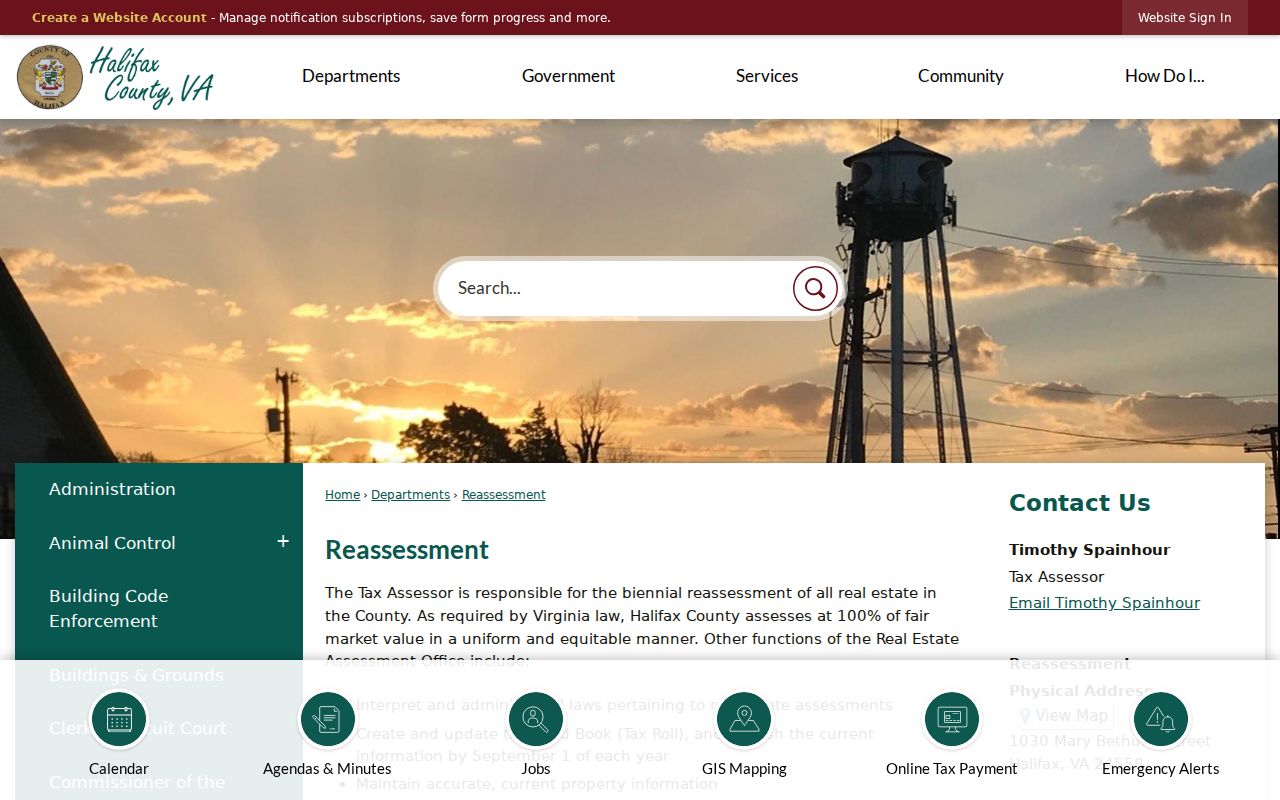
The county page above describes Halifax's assessment program in its own words. Remember what a land book is not. Its publication date is not a deed date. A recent conveyance may not have reached the assessment roll yet. When the assessment name differs from the newest recorded grantee, ask the Commissioner whether an update is pending. Then verify the transfer in the clerk's deed records.
Assessment, tax rate and tax bill are related but separate. The assessment office values land and improvements for the book. The Treasurer bills and collects under current rules. Property inside town limits may also carry a Town of Halifax charge. Compare two neighboring parcels? Check the jurisdiction as well as the assessment year. A countywide standard can sit beside a local town levy.
Halifax County Property Records at the Circuit Clerk
The Halifax Circuit Court Clerk is the legal custodian of land records in the county. The office sits in the 10th Judicial Circuit. Its holdings include deeds, deeds of trust, judgments, wills, and probate filings. It also keeps marriage licenses and circuit-court case files. The statewide Virginia Circuit Court Secure Remote Access service operates online. It opens land records for participating courts. The local clerk must authorize each subscriber. Viewing document images requires an authorized subscriber agreement and the applicable subscription charges. Some participating courts allow free index-only access; the clerk's office can state Halifax's exact arrangement. The Virginia courts draw the line between index access and images. The SRA information page shows where that line sits.
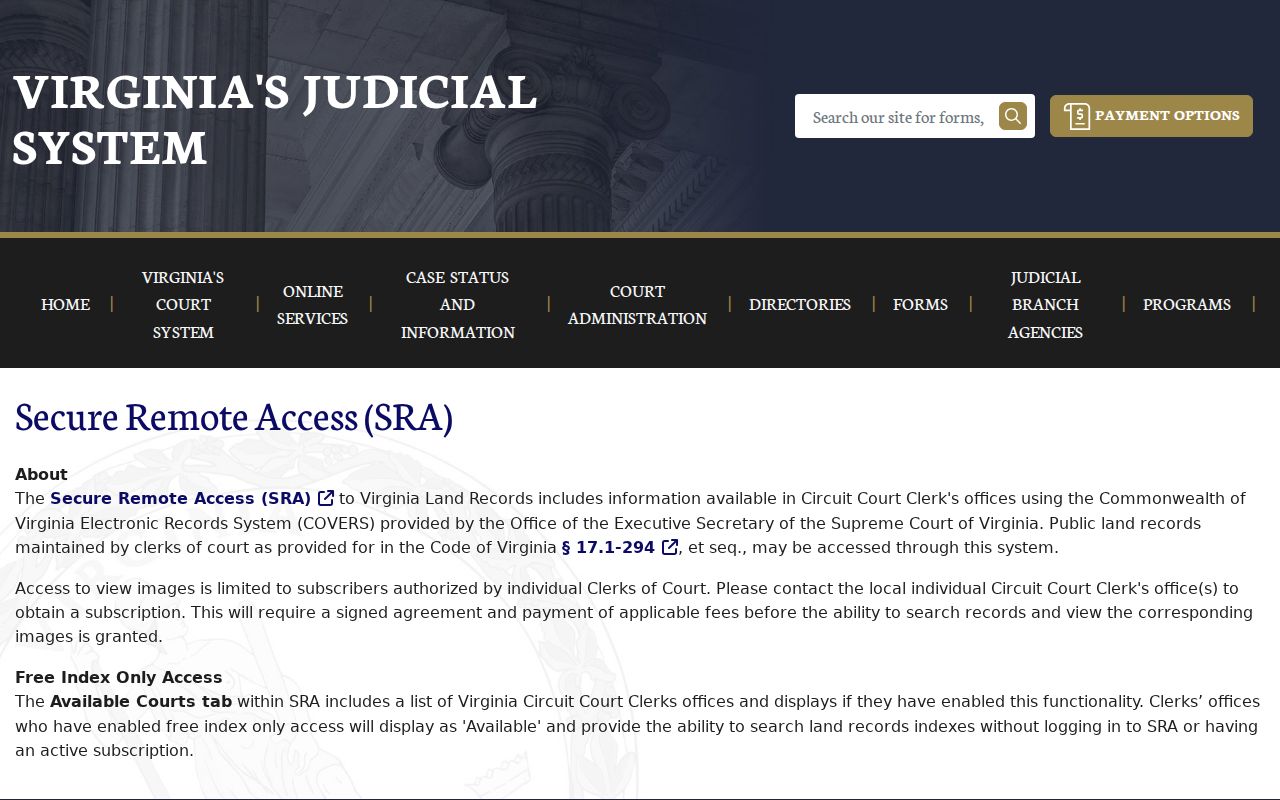
The image above shows the statewide SRA model. It is not a guarantee about any particular Halifax search. Halifax's online deed index has a starting year that the clerk's office can confirm directly. If the index does not reach your transfer date, ask which books, microfilm, or counter process cover the older material. Never assume a statewide service carries the same years and document types in every locality.
When you contact the clerk, bring specifics. Give the parties' names and an approximate date. Include the parcel number if known, and book and page if you have them. Mail should go to P.O. Box 729, not the courthouse street address. Confirm the accepted copy request method, the current fee, and payment instructions before sending anything.
A Halifax County Deed Crosswalk Shows Why Numbers Differ
A single Halifax County deed can carry several numbers. Each one answers a different question. A 2025 sample deed shows why. It names parcel 30044 and reports $40,000 in consideration. It also cites an assessed value of $19,240. An earlier deed sits at Book 701, Page 849. The parcel itself is a two-acre tract described by metes and bounds. The deed carries a title-insurance reference as well.
So the numbers sit side by side but mean different things. Consideration reflects what the deed recites. The assessed value drives the tax roll, and the book-page cite points to the prior transfer. The sample works well as a teaching example. It is not a valuation rule, though. It says nothing about what another Halifax County parcel is worth.
| Clue in the instrument | What to do with it |
|---|---|
| Parcel 30044 | Use it to locate the assessment or map record, then confirm parcel continuity. |
| $40,000 consideration | Read as the stated transaction consideration, not automatically today's market value. |
| $19,240 assessment reference | Compare with the land book and the relevant tax year. |
| Book 701, Page 849 | Follow the prior instrument to continue a chain-of-title review. |
| Two-acre metes-and-bounds description | Compare the written calls with a plat or survey, not just aerial pixels. |
Price, assessment, and taxable bill need not match. A deed may contain facts that never appear on a tax page. The assessor may update parcel information on a different schedule entirely. A careful property search preserves each figure with its own source and date instead of crowning one number as the universal answer.
Historical Halifax County Property Records Reach Beyond the Web
Halifax County property records stretch back to the county's formation from Lunenburg in 1752. That long history gives researchers an archival horizon reaching well beyond any web search. Not every deed book is indexed online back to 1752. So older Halifax County records often require other routes. The Library of Virginia holds Halifax County microfilm and original records. Its catalog of Halifax microfilm identifies what is available. The 1924 county history by Wirt Johnson Turner Carrington can help trace a road, church, mill, community, or former owner before you open a clerk book. So can the WPA Virginia Historical Inventory material at the Halifax County library and local historical collections.
Treat those sources as clues, not proof. A family history, map, or newspaper story can describe a property without establishing title. Confirm ownership in the land records themselves. Keep names, dates, and book-page citations separate in your notes. That way a later researcher can tell a lead from a recorded transfer.
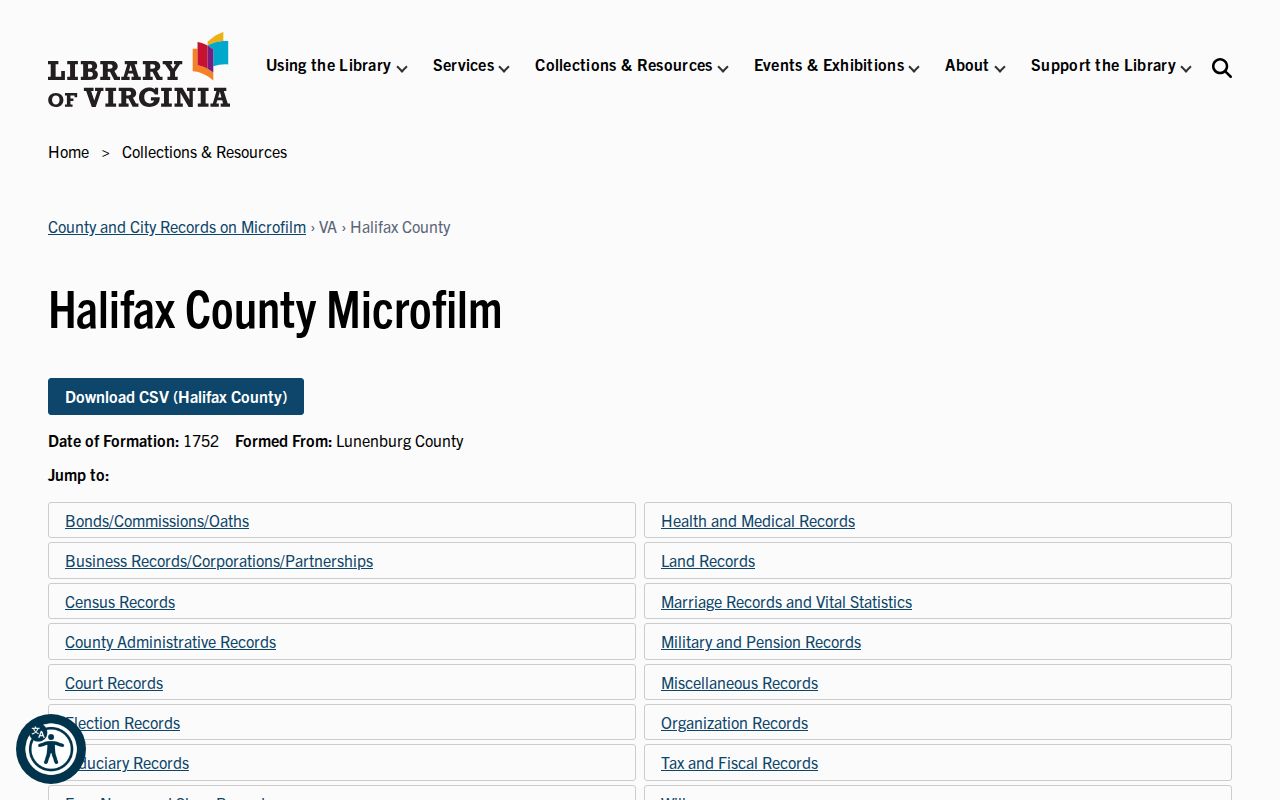
The catalog entry points to holdings, not to an online deed index. Older volumes may need a microfilm reader or an archival request. When a record never surfaces in a remote interface, the clerk can name the correct book series, and the library and historical groups can supply context and name variants.
South Boston Property Records Keep a Locality Change in View
South Boston carries a jurisdictional twist that matters for property records. The town stood as an independent city from 1960 through 1995. It then rejoined Halifax County and operates today as a town. Modern deed searches run through the Halifax Circuit Court Clerk. A transfer recorded during the independent-city years may instead sit under a different locality label. A current Halifax County filter can miss such older records. So keep the historical jurisdiction name in play.
Population figures deserve their vintage too. South Boston counted 7,966 residents in the 2020 Census. Earlier estimates live in Halifax County planning materials. Growth does not rename a parcel. But town and county lines can affect zoning, permits, and tax routing. ZIP geography is no substitute for a legal boundary.
A careful South Boston search pairs two trails. Use the current Halifax County parcel and deed records for anything recent. For a 1960-to-1995 date, add the older locality label. That simple step widens the net considerably. The city-specific records guide walks through the planning and historical leads. It does so without repeating the Halifax County-wide office directory.
Halifax County Permit Records Link Addresses to Parcels
A building permit application ties an address to a parcel. Halifax County's form asks for the project address and parcel record number. Zoning, election district, and acreage are also on it. A conditional-use question appears too. The form separates Halifax County from the Town of Halifax and the Town of South Boston. Zoning permits for both towns ride along. Project type, public water or sewer, well or septic, Health Department permit details, and the utility provider round out the form. The county's forms page advises allowing at least 10 business days for a building permit.
New E-911 addresses follow the permit application. That ordering matters when an older rural description fails to match a newer situs address. It links an administrative file to a parcel number. A filed form proves neither completion nor approval, though. Ask the building office what it retains and how to request those records.
Halifax County also handles addressing through its GIS office. Its GIS page describes the E-911 addressing route alongside the county's mapping work.
Halifax County Tax Records Separate Bills from Ownership
The Treasurer collects more than real-estate tax. Personal property, permit fees, state income taxes, dog licenses, business licenses, E-911 charges, and utility taxes all flow through the Halifax County office. A payment gateway can mix account types. Pick the real-estate account when land is the question. Never apply a personal-property rate to a house or tract.
For 2026, Halifax County sets a real-estate rate of $0.50 per $100 of assessed value, with installments due June 5 and December 5. Machinery and tools plus personal property follow separate rates and calendars. Check the Treasurer page first. It posts current instructions, fees, and any extension before you pay. A receipt proves money posted to an account. It does not prove the deed names the right owner of record.
Tax bills and ownership are separate questions. Relief, appeals, and billing hit different desks. The property-tax guide covers the due dates, the appeal form, and the split between an assessment question and a bill question.
Halifax County WebGIS Is Useful but Not a Legal Description
Halifax County WebGIS gives property records a useful visual layer. Parcel shapes, aerial imagery, and zoning all appear on one map. The county frames it for planning and public use. It also states plainly that the data carries no legal weight. The map does not represent a legal description. The county accepts no liability for errors or decisions built on it. A drawn line can point you toward a parcel.
The distinction bites hardest on a narrow strip. The same is true for an old road or a rural metes-and-bounds tract. Screen lines are not survey monuments, boundary calls, or a title opinion. An aerial edge is a clue. Verify it in a recorded instrument. Pull the deed or plat with the parcel number and the legal description. Seek a licensed surveyor when a physical boundary matters.
For ownership, compare the latest recorded deed with the land-book record. For value, identify the assessment year. Each office answers a narrower question than the whole search. The map's update note should be read alongside the verification warning. It is not proof that every layer is current. An assessor change, deed recording, or address update may still be in process elsewhere.
Limits of Halifax County Public Property Records
Halifax County property records cover a wide range. Deed recordings, assessment data, tax accounts, parcel geometry, zoning context, and permit files all live in them. They cannot show who occupies a building. Nor can they settle an unrecorded agreement, guarantee a complete chain of title, appraise a home for sale, or locate a boundary on the ground. Entries may run late or sit incomplete. Some hide under a prior name or locality. Lean on them for property research, transaction preparation, and civic understanding, then ask the official custodian to confirm any detail that affects a decision.
Lawful use. Use owner and parcel information for legitimate property research and public-record purposes. Do not use a search to threaten, track, harass or harm a person; a records search also does not replace a title professional or a licensed surveyor.
A single mismatch rarely settles anything. When one source conflicts with another, jot down what each says. Include the date you checked. Then take the question to the right office. The assessor handles a land-book entry. The Treasurer handles an account. The Circuit Court Clerk handles a recorded instrument. That approach beats trusting one search result. It should not be the last word on Halifax County property records.